
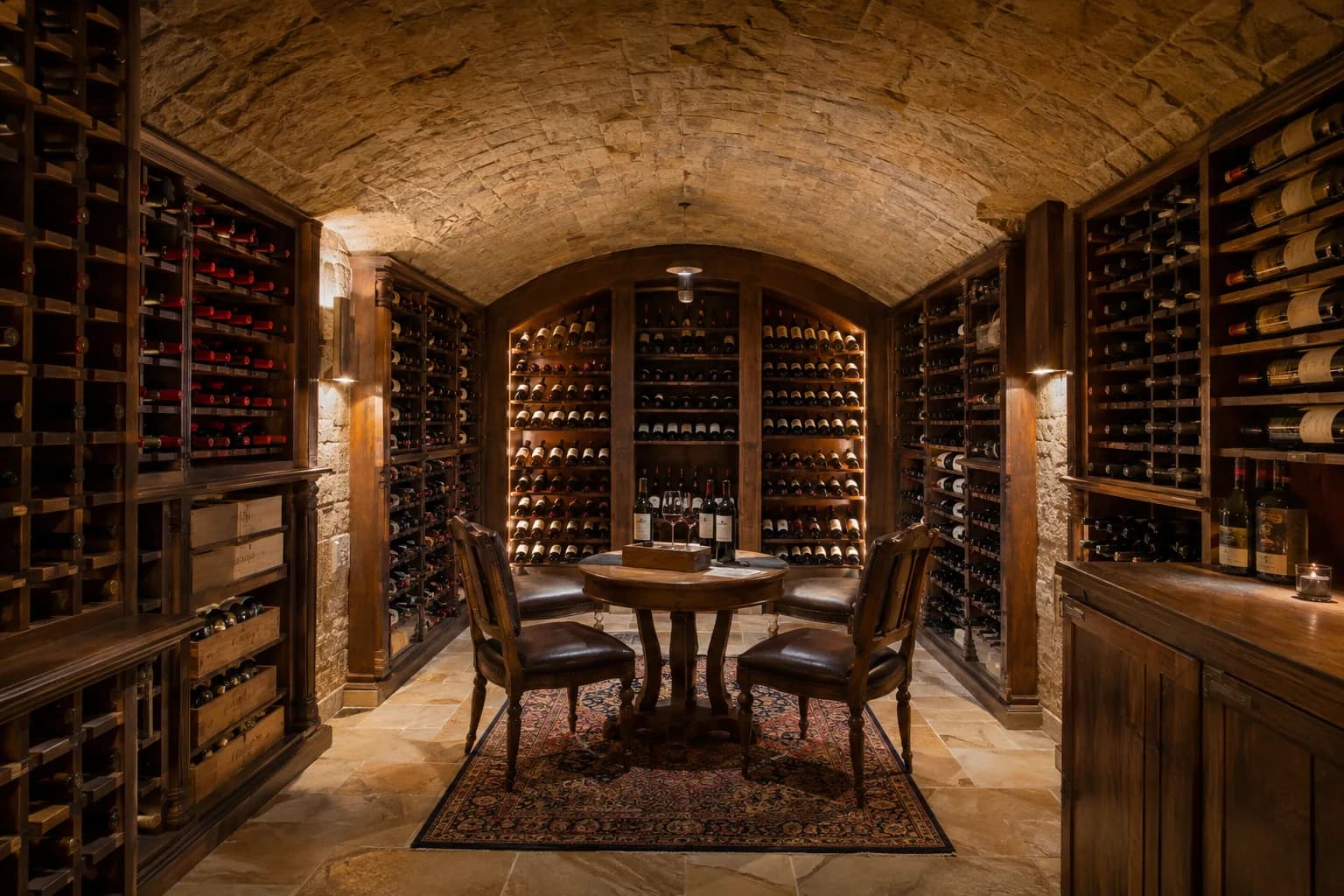
The well-planned wine room
Does Your Wine Collection Need an Appraisal or Just a Catalogue?
Before paying for a wine appraisal, separate bottle cataloguing, a sale estimate and a formal report. Compare scope, existing records and the complete fee.
Start here
At a glance
Buy cataloguing when you need an accurate record of what you own and where it is. Consider an appraisal when you need a professional opinion of value for a defined purpose. Before commissioning a report for insurance, ask your insurer or broker what it will accept, then have the appraiser quote that exact assignment. An app value or complimentary sale estimate does not automatically meet those requirements. You may need both services, but an existing, usable inventory can help avoid paying to count the collection twice.
The racks are planned. Do you know what the bottles are worth?
You are putting real care into the new cellar, and someone asks what the collection is worth. Your app shows a total, an auction house offers an estimate, and a cataloguer can put every bottle in order. Which of those should you actually pay for?
Start with what you need to do next. If you mainly want to find bottles and trust the count, cataloguing is the useful purchase. If someone needs a professional opinion of value, find out what report they require before buying one. The same firm may offer both jobs, but the deliverables deserve separate discussion.
A bottle list and an opinion of value answer different questions
A catalogue tells you what is there: the producer, wine, vintage, format, quantity and location, along with whatever other fields you commission. Our cataloguing guide explains how to make that record useful in the finished room. It does not become a professional appraisal just because a price column has been added.
An appraisal has a stated purpose and considers information relevant to value. Spectrum Wine describes reviewing bottle condition, purchase and storage history, and auction and retail sales data. That is a different assignment from counting cases or putting location labels on racks.
Say you have an accurate list but need a report for an insurance conversation. Show the list to the proposed appraiser and ask what further work is needed. If you have no reliable records at all, ask whether inventory preparation is included, quoted separately or something another service must finish first.
Ask the recipient what it needs before ordering a report
For an insurance purpose, start with your insurer or broker. Ask whether an appraisal is required for your particular collection and what the report, valuation date and appraiser qualifications need to be. Send those requirements to the appraiser before agreeing the work. A seller describing a report as suitable for insurance cannot decide what your insurer accepts.
Chubb’s wine-protection guidance recommends retaining receipts, descriptions, photographs and an updated inventory, alongside professional appraisals and discussion with an insurance agent. The practical point is to keep the underlying records as well as the valuation. Neither this guide nor buying a report establishes coverage for your bottles.
Keep the assignment specific. A document commissioned for one recipient or purpose may need different work for another. Ask the relevant adviser about estate, tax or other legal uses rather than assuming that a report ordered for your cellar project will serve every future need.
What does a free sale estimate actually include?
A complimentary estimate can be useful if you are genuinely considering selling. Spectrum, for example, offers a complimentary collection appraisal as a starting point for a potential sale, while asking clients who need formal insurance or estate reports to discuss documentation and terms separately. Confirm which service you are being offered.
Ask whether you will receive an informal indication, an itemised written report or something else, and who may use it. If you do not intend to sell, say so at the outset. You should not have to enter a consignment conversation merely to discover the charge for the document you wanted.
Also ask whether the appraiser buys wine, sells it on commission or receives a referral fee if you proceed. Cellaraiders, for example, describes crediting its appraisal charge against a later sale. That is a commercial term to understand, not proof that a valuation is wrong. Decide whether the recipient of your report has independence requirements before choosing the provider.
Compare the complete assignment, not a price per bottle
Ask what the fee counts. Cellaraiders distinguishes a charge per label from a charge per bottle and describes an onsite inventory visit as a more expensive alternative to supplying your own spreadsheet. Those are useful examples of why two headline quotes may cover different amounts of work; confirm current terms for your collection.
Show each prospective provider the same sample list and explain the same intended use. Ask how it groups repeated bottles, handles different formats or uncertain records, and charges for additional research, travel and a written report. Have it identify any physical inspection or inventory work that is excluded. You do not need to guess the appropriate method yourself.
Request a blank or anonymised report example and a written description of what you will receive. Agree the delivery date, how factual errors in the bottle list will be corrected, and what a later update would involve. If work beyond the original scope becomes necessary, ask for approval before the extra charge is incurred.
Use the cellar project to get the records into order once
A rebuild may involve cataloguing, a temporary move and a new rack map. Tell the people doing those jobs that an appraisal is also being considered. Ask whether the agreed inventory can be reused, who will record bottles added or removed during the work, and what date the appraiser needs the information to represent.
Keep the purposes clear when sharing information. Your designer needs the bottle mix and storage requirements to plan the room; the appraisal provider needs the information it has requested for its assignment. A valuation does not establish that a rack layout or storage arrangement is suitable.
If the collection changes after the report, keep the records current and ask the relevant professional when an update is worthwhile. There is no collection-size threshold or universal renewal interval that this guide can set for you. The useful result is a report that answers the question you commissioned, supported by a catalogue you can continue to use.
Bring the collection into the room-planning conversation
Our vetted wine cellar experts know the field and have relationships with providers. Tell us whether you are organizing an existing collection, preparing for a move or planning a new room. We can help you connect the inventory and layout questions, while your insurer and chosen appraiser settle the report requirements.
Sources & editorial notes
Prepared by Cellar Builder Guide editorial team. Updated November, 2026.
Prepared independently by the editorial team. No supplier paid for inclusion or influenced this guide.
- Wine & Spirits Appraisals, Spectrum Wine (accessed 2026-11-12)
- Vintage Wine Appraisals, Cellaraiders (accessed 2026-11-12)
- 5 tips for protecting your wine, Chubb (accessed 2026-11-12)