
Wine cellar cost & planning
Plan the room.
Then the budget.
A beautiful cellar is a complete room: enclosure, cooling, storage and installation. Build your budget around all four, then ask each builder to price the same brief.
What belongs in your quote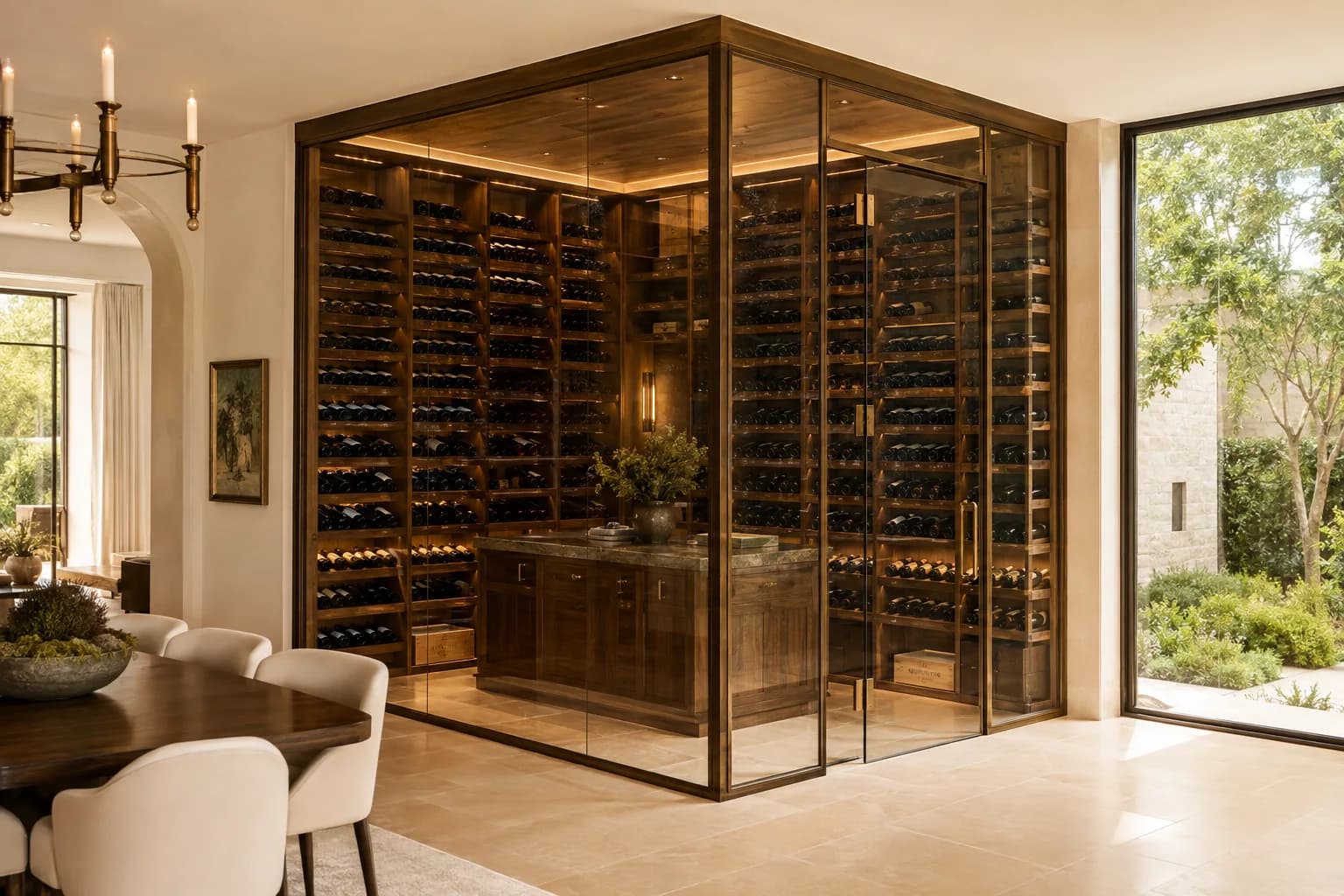
Begin with three decisions
What are you creating?
The room’s condition, your collection and the finish level give a builder the starting point for a useful estimate.
- 01
The space
A new room or a retrofit? Note dimensions, access and any existing equipment.
- 02
The collection
List bottle formats, storage goals, display priorities and room to grow.
- 03
The atmosphere
Share the glass, wood, metal, lighting and finish references that matter to you.
Compare the complete scope
Six lines every proposal should explain.
Use this as your quote checklist. Ask for a named owner, an inclusion or exclusion, and a price or allowance for each part.
| Budget item | Include in the brief | Ask the builder |
|---|---|---|
| Design & survey | Measured drawings, bottle mix, layout and material selections. | Who verifies the dimensions before fabrication? |
| Room preparation | Demolition, enclosure, insulation, doors, glazing and finish repairs. | Which work sits with the cellar team and which with your builder? |
| Cooling & services | Equipment, heat rejection, electrical work, condensate and controls. | Who designs, installs and starts up the complete system? |
| Racking & finishes | Storage, display positions, lighting, millwork and metalwork. | Which selections are fixed and which are allowances? |
| Delivery & installation | Freight, access, protection, assembly, permits and taxes. | What could change after the site visit? |
| Handover & care | Equipment records, warranty contacts, training and service access. | Who do you call when the room needs attention? |
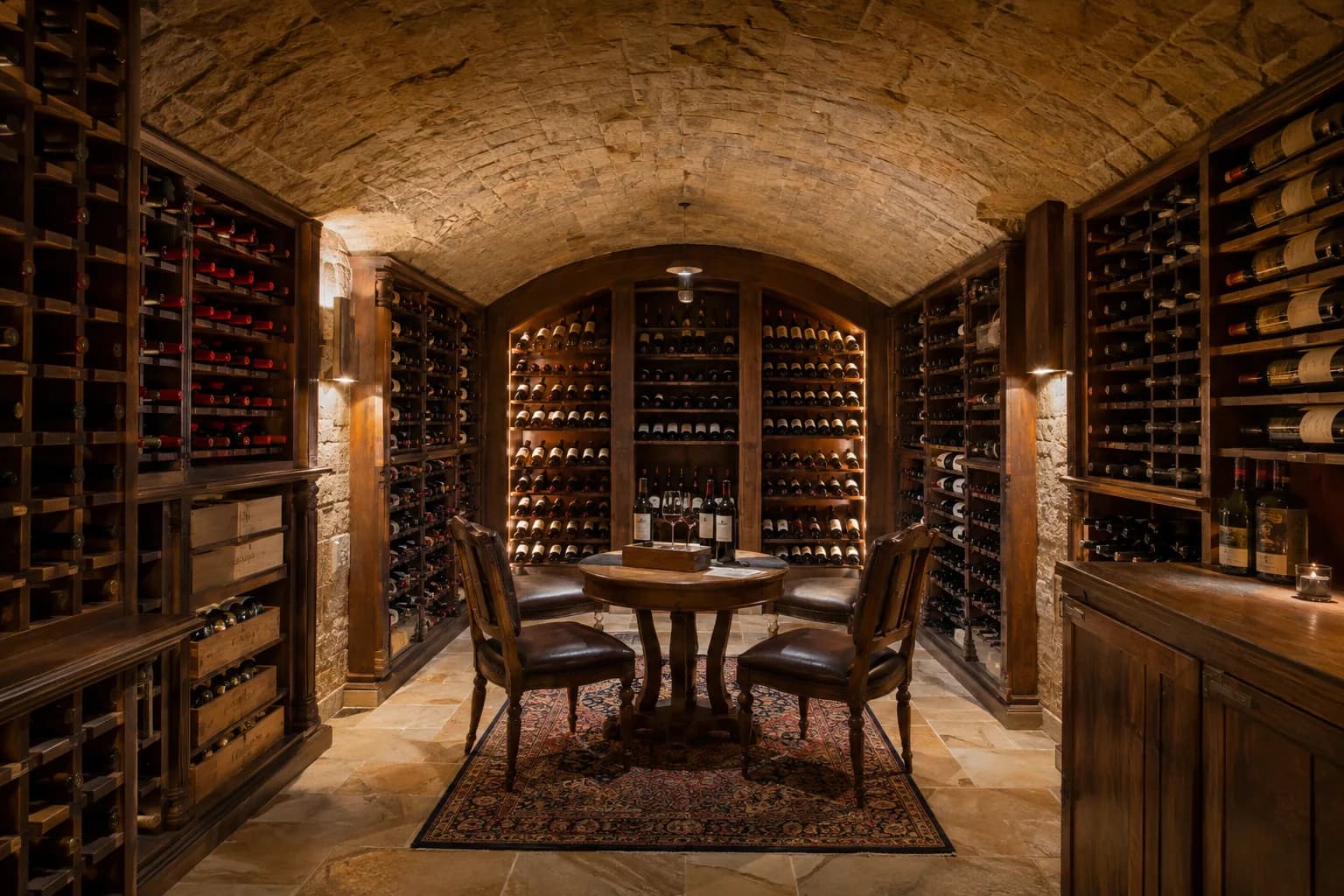
Beyond installation day
Allow for the life of the room.
Separate the construction budget from ownership costs. Ask about cooling service, energy use, cleaning, finish care and access for future repairs.
Before accepting a total, mark every open selection and unknown site condition. A clear allowance is more useful than a price that quietly leaves work out.
Compare builder proposalsBefore you approve the quote
- Confirm the inclusions, exclusions and owner-supplied work.
- List allowances with the material and quantity each assumes.
- Agree design approvals, payment milestones and the change-order process.
- Name the team responsible for startup, handover and warranty response.
Find the team for your wine room.
Explore cellar buildersPlanning references
This comparison framework draws on building-moisture guidance and manufacturer cooling resources. Your project team will define the room’s enclosure and equipment requirements.
- U.S. Environmental Protection Agency: Moisture Control Guidance
- Wine Guardian: cooling resources (manufacturer material)