The well-planned wine room
Glass wine cellar and wine wall cost
A scope-first guide to comparing an installed glass wine cellar or display wall, including enclosure, cooling, racking, site protection, and commissioning.
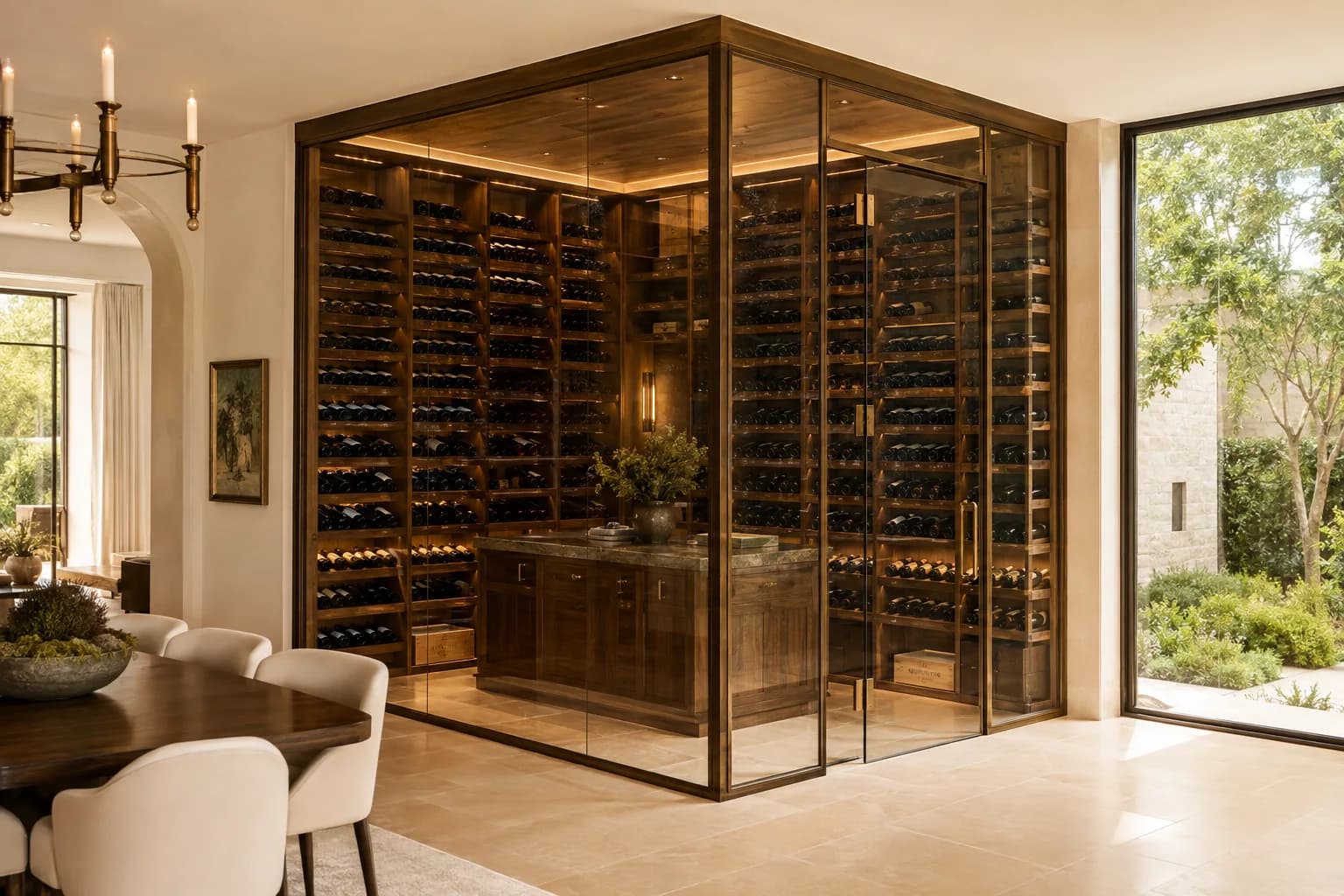
Start here
At a glance
A glass wine cellar is a climate-controlled room with a glazed enclosure; a display wall may be a different scope altogether. Before comparing prices, establish which condition applies and who owns the enclosure, door and seal details, cooling load, equipment location, electrical and drainage work, installation, testing, and finish responsibility.
Distinguish a room from a display wall
A full glass cellar needs a coordinated enclosure and climate-control approach for the room. A display wall may instead be an architectural feature within a separately conditioned space. Do not assume the same glazing, door, cooling, drainage, or commissioning scope applies to both; ask the proposing team to define the system boundary in writing.
Identify every interface
Large glazed areas, doors, lighting, adjacent room conditions, and penetrations affect the enclosure and mechanical brief. Record which trade owns each transition instead of assuming it is included.
Compare bids by inclusions and exclusions
Request a schedule of glass, hardware, framing, racking, cooling, controls, freight, site access, protection, installation, startup, and exclusions. Confirm whether taxes, permits, patching, and aftercare sit inside or outside the proposal.
Sources & editorial notes
Prepared by Cellar Builder Guide editorial team. Updated July, 2026.
This guide was prepared independently.
- Moisture Control Guidance for Building Design, Construction and Maintenance, U.S. Environmental Protection Agency (accessed 2026-07-26)
- Wine Cellar Cooling Resources, Wine Guardian (accessed 2026-07-26)