
The well-planned wine room
Rent Wine Storage or Build a Cellar at Home?
Compare ongoing offsite wine storage with a home cellar by access, service, complete costs and the pleasure of keeping your collection nearby.
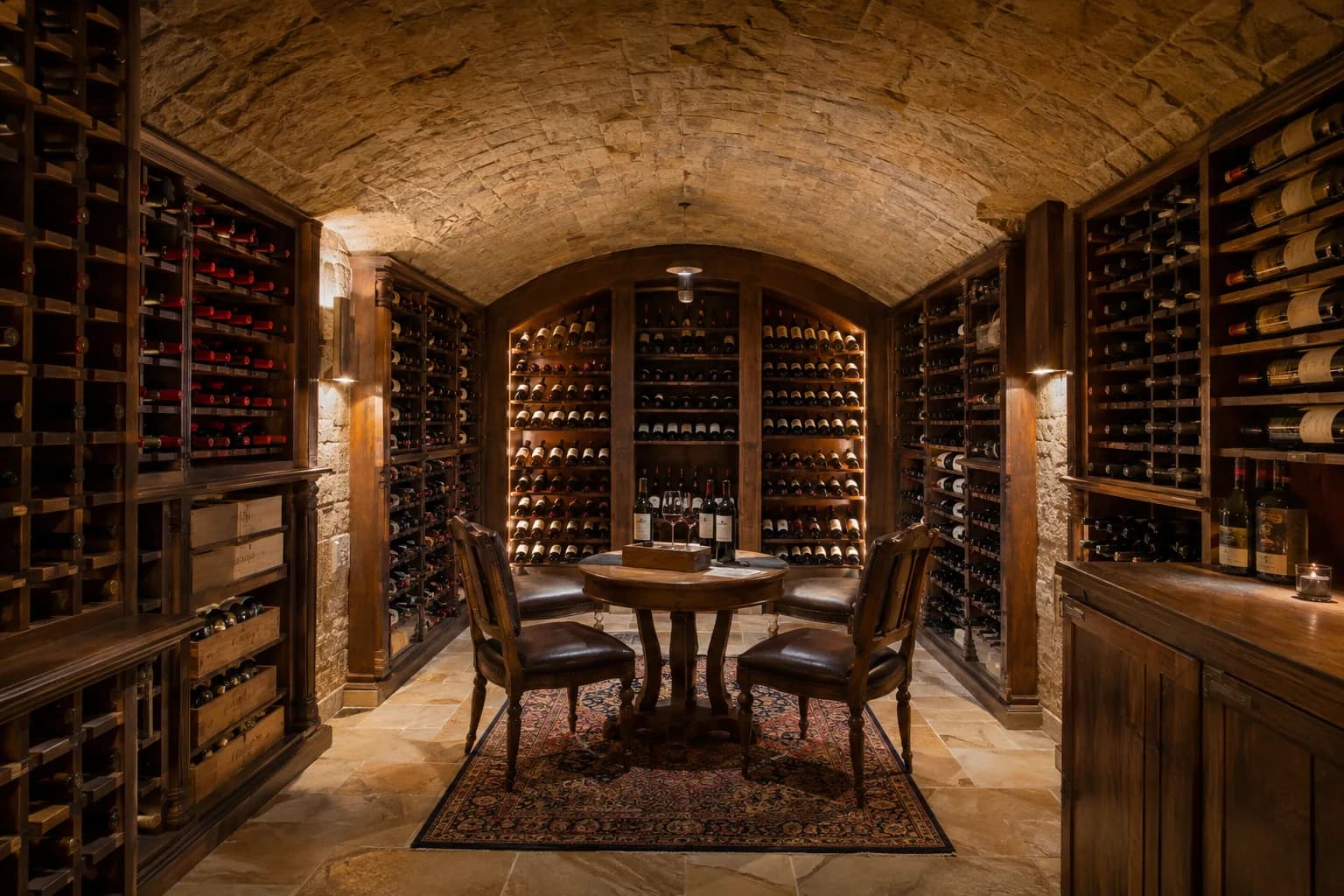
Start here
At a glance
Consider ongoing offsite storage when you mainly need somewhere for bottles to stay and can work with the facility’s access and retrieval arrangements. A home cellar becomes more appealing when choosing, organizing and sharing your collection at home is part of what you want to buy. Compare a real local storage offer with a complete home project, and consider keeping ready-to-drink bottles at home while storing the rest elsewhere. Neither option wins on bottle count alone.
Do you want the wine nearby, or the whole collection at home?
You want a proper home for your wine, but building a cellar means giving it space, money and attention. A nearby storage facility offers another route. The difficult part is deciding whether you would miss having the collection in the house—or enjoy leaving its day-to-day storage arrangements to someone else.
We would start with how you choose and use your bottles. Offsite storage can suit wine you expect to leave alone between planned withdrawals. A home cellar is more compelling when browsing the racks, changing your mind over dinner and showing the collection to friends are part of the pleasure. You can also combine the two rather than build enough space for every case you own.
Try an ordinary evening against the access rules
Imagine you have invited friends over and want a different bottle from the one you planned. With offsite storage, could you collect it that evening? Would you retrieve it yourself, arrange a staff withdrawal or book delivery? Check the actual location, opening arrangements and notice required before comparing capacities.
Vine Vault lists both collector lockers and concierge storage at some locations, and distinguishes public access from member access hours. Other locations list a different service mix. That is a useful reminder that a storage brand name does not tell you how you will get your wine back.
If the drive is practical, visit at a time you would normally collect wine. Ask about parking, bringing cases out and who else you may authorize to collect. For a staff-managed account, ask when a withdrawal becomes available and what happens to an urgent request. Do not assume delivery is included in the storage charge.
A locker and a managed collection buy different help
Ask whether you are renting a space you organize or paying a team to receive, record and retrieve wine. Find out who accepts incoming shipments, how you are told they have arrived and what record you receive. If your collection includes loose bottles, mixed cases or large formats, ask how those are accepted and charged.
You may enjoy arranging your own collection. You may prefer someone else to handle incoming cases. Decide which work you actually want to hand over before paying for the more elaborate service. A photograph of an attractive facility cannot settle that question.
For the storage conditions and arrangements, ask the facility to explain its documented provision, monitoring, response to problems and service responsibilities. Review the agreement’s loss, damage and insurance provisions with the appropriate adviser where needed. This comparison does not verify a facility’s conditions or promise protection for a particular collection.
Price the storage you will use, including getting wine back
Request a written annual example for your collection: storage, minimum charges, intake, withdrawals, packing, transport and any account or inventory services. Ask what changes if your case count grows or falls, how renewal works and what it costs to close the account and remove the wine.
Sotheby’s New York storage checkout, for example, identifies an annual account minimum, additional fees and automatic renewal. Those features matter even without quoting today’s price: multiplying a headline per-case rate by a small collection may not give you the bill you would actually pay. Check current terms for the exact service you are considering.
For a home cellar, ask for the complete installed project and a separate explanation of running costs, routine service and future equipment access. Our proposal-comparison and maintenance guides can help with those conversations. Compare the two over a period that reflects your plans, with renewal and service costs left visible. A simple cost crossover is an illustration, not a promise of future prices or savings.
What would the room give you beyond storage?
A cellar can be a part of your home you love using. That is a legitimate reason to build one. Describe the experience you want—quietly choosing dinner wine, organizing a growing collection or enjoying the room with guests—so the designer can distinguish useful features from additions you would rarely use.
If your main aim is to hold unopened cases for later, you may find the room less valuable than you first imagined. Ask what a smaller home arrangement would do for the bottles you open regularly. Our cabinet-versus-cellar guide compares those home options once you have decided what needs to stay nearby.
Keep the building and cooling decisions with your qualified project team. Available floor space alone does not establish that a room is suitable for wine storage. Likewise, choosing offsite storage does not remove the need for an appropriate arrangement for any bottles you keep at home.
You can keep dinner wine at home and the rest elsewhere
Say you like choosing bottles spontaneously but buy some wine by the case for later. You could ask a designer to plan for the collection you want within reach, then request a separate offsite offer for the remainder. Use your actual bottle mix and retrieval habits; there is no standard percentage that should live in each place.
Agree how you would track what is where and how often you expect to bring bottles home. If a two-location arrangement sounds like an extra chore, a larger home project or a more managed offsite service may suit you better. The collection should be enjoyable to own, not just easy to count.
This is an ongoing ownership decision. If you already have a cellar and need somewhere for its contents only while building work happens, use our temporary-storage guide instead; that plan needs a defined move out and return.
Compare one local offer with one realistic home brief
Bring your approximate collection, buying habits, likely withdrawals and the home space you have in mind. Ask for a specific offsite service and a home proposal that answers the same needs. You should be able to explain the extra convenience, experience or service each option buys before committing.
Our vetted wine cellar experts know the field and have relationships with providers. We can help you clarify what you want to keep at home and what a worthwhile room would need to do. You do not need to decide on a walk-in cellar before starting that conversation.
Sources & editorial notes
Prepared by Cellar Builder Guide editorial team. Updated November, 2026.
Prepared independently by the editorial team. No supplier paid for inclusion or influenced this guide.
- Locations, Vine Vault (accessed 2026-11-11)
- Wine Storage checkout and annual renewal information, Sotheby’s Wine (accessed 2026-11-11)