The well-planned wine room
Wine cabinet or walk-in cellar: which is worth building?
Decide whether a refrigerated wine cabinet meets your needs or a walk-in cellar earns its space, construction work and ownership commitment.
Start here
At a glance
Choose a refrigerated cabinet when your collection fits a practical cabinet layout and you mainly want convenient storage and display. A walk-in cellar earns its place when you need a larger, more adaptable storage room or the experience of entering your collection. Compare usable capacity, the complete installation and future service access before deciding.
Do you want to store wine, or spend time with it?
You can already picture the bottles behind glass. What’s harder to picture is how much of your house you should give to them. A beautiful cabinet may do everything you need; a room may be the part of the project you’ll enjoy most. The useful question is what you expect to do there on an ordinary evening.
If you want to choose a bottle beside the dining room, start by testing a refrigerated cabinet. If you want to walk among the collection, organize cases and browse with a guest, draw a room. Neither choice becomes better just because it holds more bottles. You’re buying a way to live with your collection, as well as somewhere to keep it.
Count the bottles you actually buy
Before requesting either design, make a rough inventory of everyday bottles, bottles you’re holding, Champagne, larger formats and unopened cases. Then add the growth you genuinely expect. A headline capacity is only useful if your bottles fit and you can retrieve them without dismantling a display.
Vigilant’s cabinet range illustrates the tradeoff: it offers different shelving and rack arrangements, and its pull-out shelving sacrifices capacity for easier access. That doesn’t establish a universal cabinet limit. It does give you a good question for any supplier: can you show my bottle mix in this exact layout?
Say you own a modest collection but buy wine by the case several times a year. A densely packed cabinet may look sufficient on paper yet leave nowhere convenient for those arrivals. Ask for a second layout with case storage before concluding that you need a whole room. Conversely, don’t commission a room whose apparent capacity relies on awkward corners you’ll rarely use.
A cabinet still needs an installation plan
The word cabinet can make the purchase sound like furniture. A refrigerated cabinet also needs a suitable cooling arrangement and somewhere for equipment to be serviced. Vigilant, for example, offers top-mounted and remote ducted cooling configurations. Get the installation requirements for the actual option you’re considering before anyone designs surrounding millwork.
Ask the supplier to mark ventilation and equipment clearances, electrical requirements, door opening space and the delivery route. If the unit will sit beside a dining table, ask where heat is discharged and what you will hear while it runs. Request the relevant operating information rather than accepting ‘quiet’ as a complete answer.
Built-in appearance and easy replacement are separate questions. Have the designer show how a failed cooling component, or the cabinet itself, could come out without destroying adjacent finishes. This is worth resolving while the drawing is still easy to change.
A walk-in room buys flexibility—and more coordination
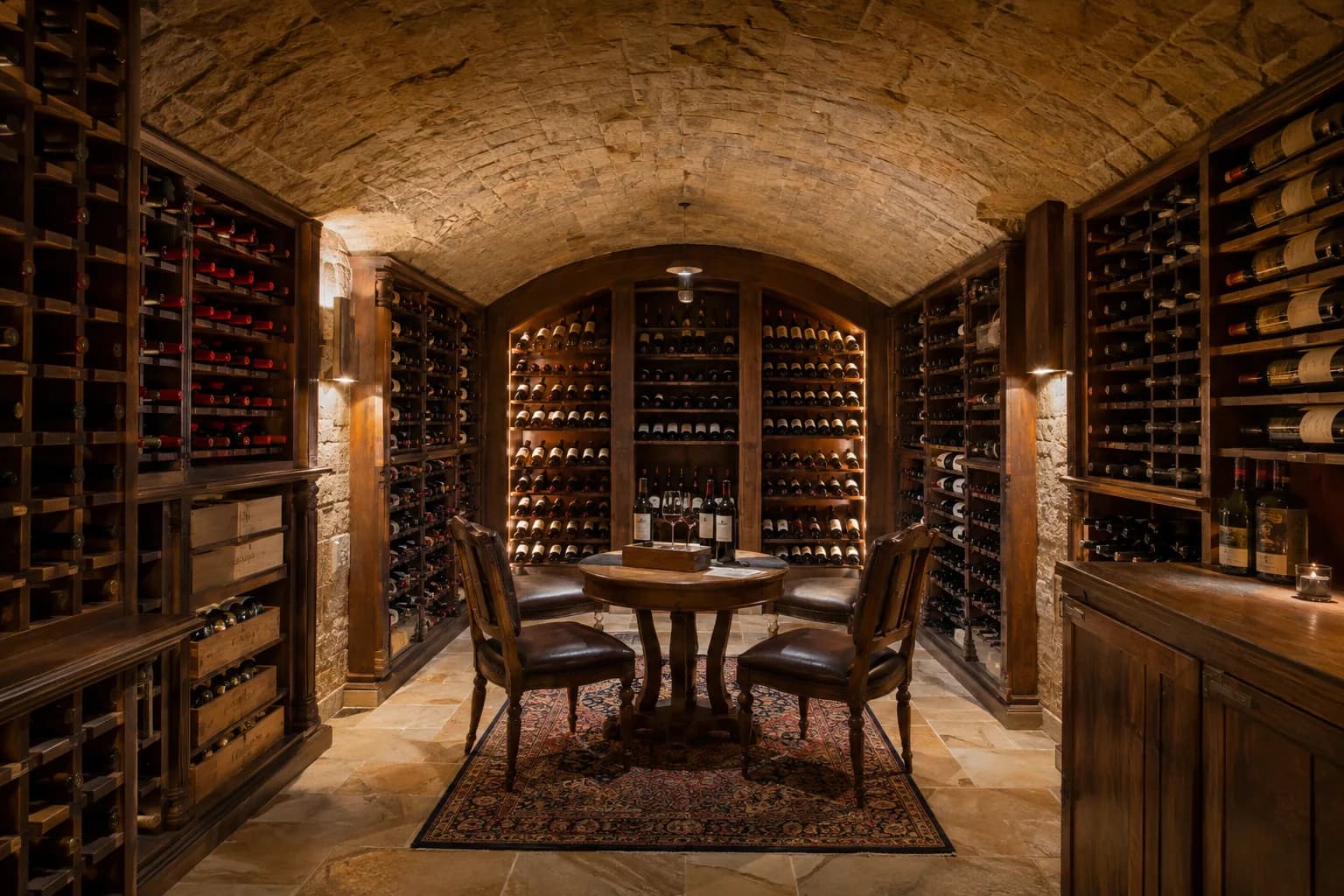
A room gives the designer more ways to separate case storage, individual bottles and display. It also asks you to commit floor space and coordinate the enclosure with cooling, doors, lighting and racking. Those decisions belong together; a room full of attractive racks isn’t a complete refrigerated cellar proposal.
Request a concept that shows how you enter, reach bottles and access equipment. Then ask which building work is included. A cellar specialist may supply the storage and cooling while your contractor handles parts of the room. Our cooling-system design guide and construction checklist can help you explore that scope once you’ve decided a room is the right direction.
If browsing the collection is the pleasure you’re buying, preserve comfortable access in the layout. Giving up that experience to squeeze in another row of racks defeats the reason you chose a room.
Compare the finished projects, not the starting prices
Ask for two complete alternatives: a cabinet installed in its intended location, and a cellar ready to receive wine. Include delivery, installation, surrounding finishes, cooling work and any building changes in each comparison. Keep optional decorative upgrades separate so you can see what actually changes the decision.
There’s no dependable rule that every cabinet costs less than every room. Bespoke cabinetry and remote equipment can add work; a cellar’s existing conditions can change its scope considerably. Decide whether the extra spend buys capacity, access or an experience you’ll use, rather than comparing two unexplained totals.
For a future move, don’t assume a cabinet is automatically portable. Ask about disassembly, weight, doorway access and reinstalling its cooling arrangement. For either option, establish who services it and how the warranty applies to the chosen installation.
Bring one collection brief to the conversation
Share your approximate bottle mix, likely growth, the room you have in mind and a few photographs. Tell the designer whether you mainly want storage near dinner or the pleasure of stepping into a collection. Ask for a usable layout and complete scope for both routes if you’re still undecided.
Our vetted experts can help you compare those options using their field experience and relationships with providers. You don’t need to settle the technical design before submitting an inquiry; the most useful starting point is explaining what you want the wine space to do for you.
Sources & editorial notes
Prepared by Cellar Builder Guide editorial team. Updated September, 2026.
Prepared independently by the editorial team.
- Standard Wine Cabinets, Vigilant (accessed 2026-09-23)
- Resources and Owner Manuals, Wine Guardian (accessed 2026-09-23)