
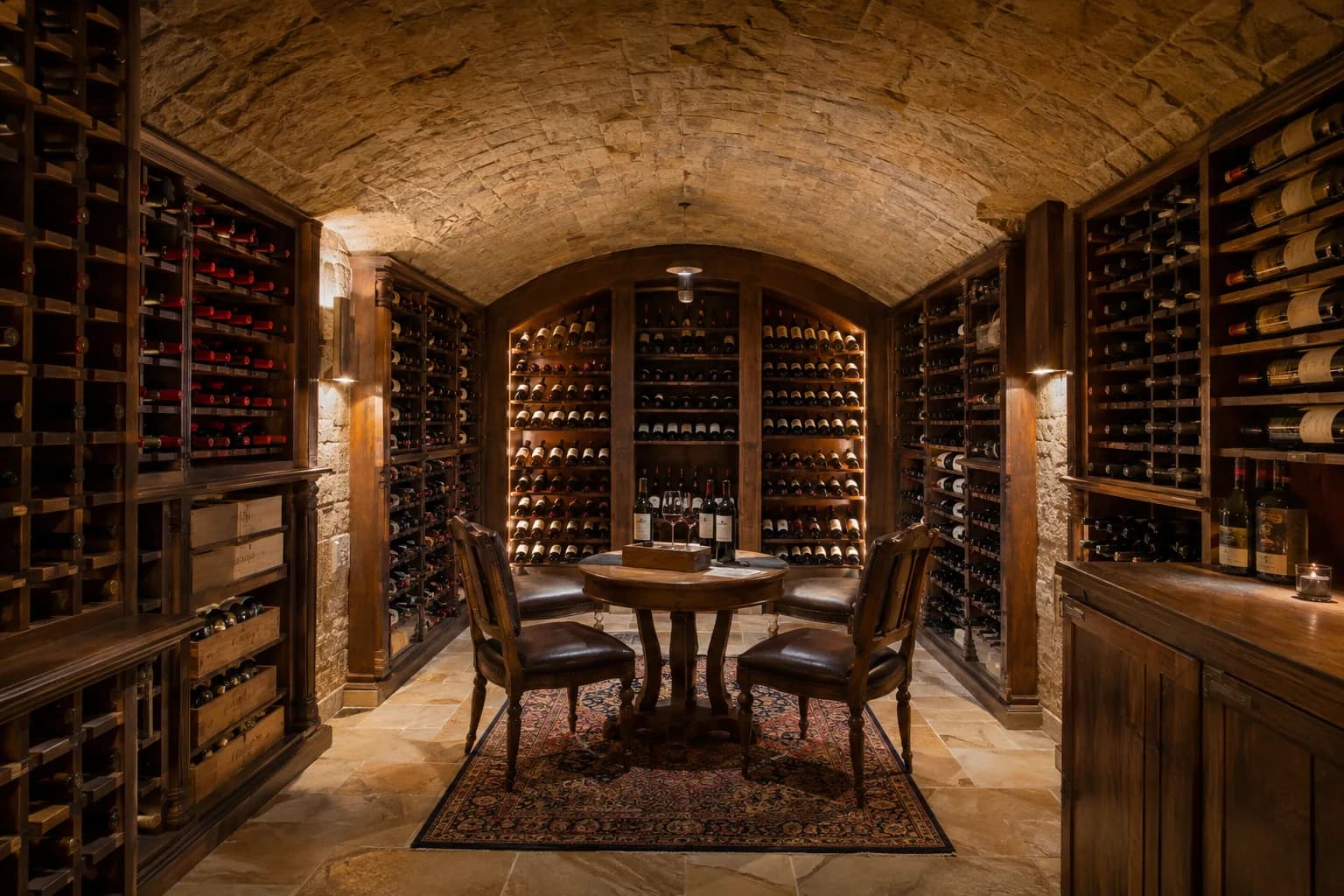
The well-planned wine room
Should You Book a Private Wine Tasting Before Filling Your Cellar?
Decide whether a private wine tasting will help you choose your future collection. Compare the brief, wine costs, session format and useful follow-up.
Start here
At a glance
A private tasting can be worth buying when you want a cellar but cannot yet explain which wines you want to keep in it. Ask for a guided comparison built around your household’s preferences and buying budget. Confirm whether wine, glassware, travel and written notes are included, and whether buying bottles afterward is optional. If you already know what you enjoy, a tasting may be a lovely evening without resolving a collection-planning problem.
You want the cellar. Which wines will you want in it?
You can picture the finished wine room, but choosing the bottles feels less certain. You remember wines you've loved at restaurants without remembering quite why. Your partner has different favorites. Would a private tasting help you build a collection you both enjoy, or would it just be another evening of interesting bottles?
We'd consider paying for one when discovering your preferences is the job you need done. Ask for a small, purposeful comparison and enough discussion to explain what you liked. If your tastes are already clear, you may get more from a merchant who can find those wines or an adviser who can review your existing collection.
Give the session a question to answer
Tell the host what you hope to learn before accepting a proposed wine list. You might want to compare styles you tend to confuse, find choices both partners enjoy or explore an unfamiliar region before buying several cases. Include the bottle prices you would normally consider. A tasting built entirely around wines you would never buy may be enjoyable while doing little for your future cellar.
Say one of you likes fuller reds and the other usually chooses lighter wines. Ask the host how a comparison could help you describe those preferences and find possible shared choices. You don't need to arrive knowing the technical vocabulary; explaining what you enjoyed and what put you off gives the conversation a useful starting point.
Sommbody's Wine offers private home tastings with wines chosen to the client's tastes and a level of formality agreed for the occasion. It lists wine consultations and dinner sommelier service separately. Those are useful distinctions to clarify with any host: an entertaining dinner, a tasting lesson and advice on building a collection can involve different work.
Find out what the tasting fee leaves to you
Request a complete quote for the agreed number of people and the proposed session. Ask which wines will be compared, who buys them and whether the bottle budget is included. Confirm glassware, tasting materials, travel, preparation and clearing up where those matter to your booking. Have the host identify any minimum appointment or guest charge.
Southern Somm lists an in-home tasting service with a two-hour minimum, up to six wine selections, glass rentals and tasting materials. Its page says to add wine and notes that location and guest count affect cost. This is one service example, not a standard package or a quote for your address. Confirm the actual wine purchase arrangement before comparing its fee with an all-inclusive offer.
Ask what changes if someone cancels or the agreed wines cannot be obtained. Have any substitutions discussed in relation to the learning goal. Replacing an unavailable bottle may be perfectly sensible, but you still want the session you agreed to buy. Availability, cancellation terms and any added charges need confirmation for your own booking.
Choose the format that lets you pay attention
An at-home session can make it easier for the household to take part and discuss the wines together. It also means agreeing on a place to sit, set out glasses and host the visit. Ask the sommelier what it needs; owning a cooled wine room does not mean the tasting should take place inside it. Our tasting-area guide covers that separate room-planning decision.
Compare an in-store or virtual session if those formats are available from your chosen host. Ask how the same learning goal would work in each. A virtual appointment may leave you arranging the wines and glasses yourself; a store visit may make the event simpler to host. Judge the complete arrangement rather than assuming a lower session fee buys the same experience.
Keep the guest list suited to the conversation you want. If the evening is mainly a celebration with friends, say so and enjoy choosing an event for that purpose. For a collection decision, ask how the host will give each decision-maker time to compare wines and explain preferences. A larger party is not automatically a better way to discover what your household wants to buy.
Leave with something you can use when buying
Before booking, agree whether you'll receive a wine list, room for your own notes or a short written recap. Ask whether any follow-up discussion or buying suggestions are included. These are requested deliverables, not benefits to assume from the phrase private tasting.
Record which wines you would actually choose again, their identities and the prices discussed. Keep individual preferences visible where the household disagrees. A useful result might be a few promising styles to explore, rather than a definitive shopping list for the entire cellar. You can buy modestly and continue learning without committing to cases immediately.
Ask whether the host also sells or sources wine and how any later purchase would be charged. Confirm that attending the tasting does not commit you to an order, club or advisory package. You may welcome help finding a favorite afterward; agree that next assignment deliberately. Our sourcing guide covers the search and purchase stage once you know what you're looking for.
Bring the discoveries into the cellar conversation
If the session helps you describe what you want to drink and how you want to entertain, take those intentions to the cellar designer. Discuss likely bottle formats, case buying and how often you expect to retrieve wine. Have the responsible designer translate the collection brief into a suitable layout and storage proposal. A tasting does not specify racking or approve a cooling design.
We'd book the session when its comparison, total cost and practical outcome are clear enough to make the uncertainty smaller. If you already have a reliable list of favorites, keep the tasting as an optional pleasure and spend your planning budget on the question that's still unresolved.
Our vetted wine cellar experts bring field experience and relationships with providers to the room-planning discussion. Tell us what you hope to keep and how you want to enjoy it. We can help you clarify the cellar brief while you arrange any tasting directly with your chosen wine professional.
Sources & editorial notes
Prepared by Cellar Builder Guide editorial team. Updated November, 2026.
Prepared independently by the editorial team. No supplier paid for inclusion or influenced this guide.
- Services — Wine Tastings, Sommbody's Wine (accessed 2026-11-16)
- Pricing — In-Home Private Tastings, Southern Somm Tasting Academy (accessed 2026-11-16)