The well-planned wine room
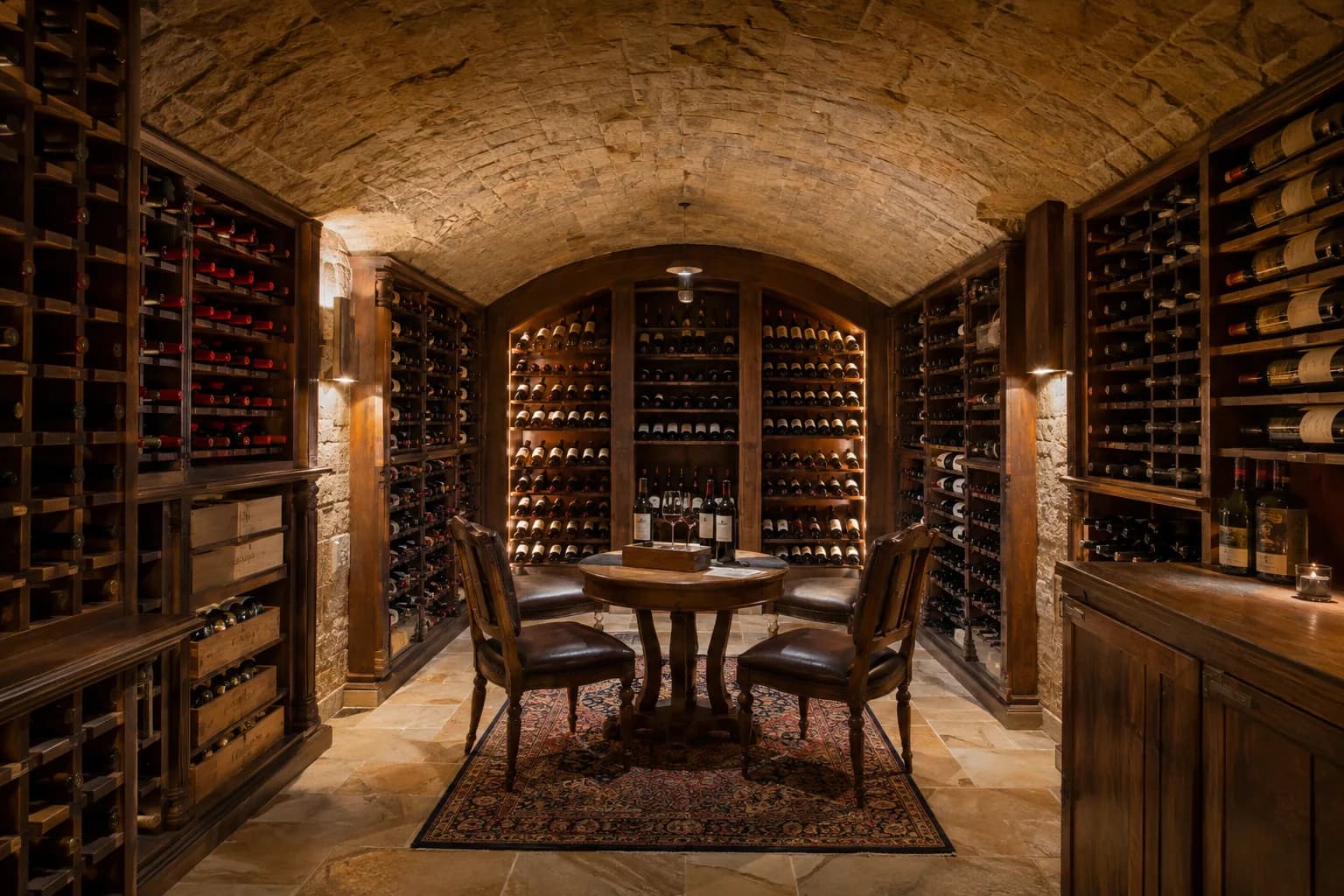
Should Your Tasting Table Be Inside the Wine Cellar?
Decide whether to put tasting space inside the cooled cellar or in an adjoining room by considering how you entertain, seating, storage and serving.
Start here
At a glance
For long, relaxed evenings, start by comparing a tasting area beside the cooled cellar with seating inside it. An interior tasting spot can be appealing for a brief visit among the bottles, but you should experience the proposed conditions and test the occupied layout before committing. Keep collection-storage conditions separate from the comfort and serving preferences of your guests.
Picture the whole evening, not just the first pour
A table surrounded by your collection looks like the perfect place to open a bottle. Before giving up rack space for it, think about how you host. Are you taking friends in to choose a wine, or settling down for dinner and a long conversation?
For the second kind of evening, ask for a layout with seating beside the cellar as well as one inside it. You can still enjoy the view of the bottles. The decision is whether being physically among them is worth the effect on comfort, usable storage and the way everyone moves around.
Try the conditions you are asking guests to enjoy
Have the designer explain the proposed storage conditions for your collection. Then, if possible, spend time in a comparable operating cellar with permission. Don't judge the idea only during a quick walkthrough of an unfinished room.
Wine Guardian distinguishes wine-storage conditions from serving temperatures. Neither is a promise that you and your guests will enjoy sitting there for an evening. Tell the designer how many people you expect, how long they will stay and whether the room is meant for occasional tastings or regular entertaining.
Don't plan to make guests comfortable by changing the cellar controls whenever you host. Ask the responsible designer how the intended use fits the collection's requirements. A separate sitting area deserves serious consideration if the two uses pull the design in different directions.
A tasting ledge and a dinner table ask for different rooms
An interior tasting feature needn't mean a full dining arrangement. Wine Guardian's Smithling Cellars project gallery shows a barrel-shaped wall tasting area within a cooled cellar. It is a useful example of a compact feature, not evidence that the same layout or equipment will work in your home.
Ask for your actual chairs and table to be shown on the plan, including chairs pulled out and people using them. Walk through choosing a bottle while someone else is seated. Can the door open as intended, and can people use the space without repeatedly asking one another to move? Have the designer verify the required circulation and access.
A narrow surface for setting down a selected bottle may satisfy the ritual you want while leaving more room for storage. If you really want dinner among the bottles, say so early and let the team design for that use rather than adding a table at the end.
Compare the storage you would give up
Request two versions using the same collection: one with your preferred tasting arrangement and one with seating outside. Compare the useful bottle positions, including cases and unusual bottle shapes, after the furniture and access routes are included.
Avoid judging the layouts by the headline capacity alone. A table that leaves the far racks awkward to reach may cost more usable storage than its footprint suggests. Our bottle-capacity guide helps you check the rack assumptions; here, the question is whether the entertaining experience is worth the specific space you lose.
If you choose seating outside, ask for a view from the occupied chairs. Positioning a lovely glass cellar behind everyone's backs may miss the point. Your designer can test the relationship between table, doorway and visible collection before either room is built.
Plan the journey from bottle to table
Talk through one evening from start to finish: choosing bottles, opening them, serving, placing used glasses and clearing up. Decide which activities belong inside the cellar and which belong in the adjoining room. Show any proposed work surface or storage on the plan rather than expecting spare space to appear later.
Storage and serving are different jobs. Wine Guardian's serving guidance explains that preferred serving temperatures vary with the wine. You don't need to make the entire cellar a serving-temperature room to enjoy a bottle at dinner; discuss your actual collection and serving routine with the appropriate wine and cellar professionals.
Ask the cooling designer to account for the intended room use and door-opening pattern, along with the final enclosure and equipment arrangement. The cooling-system guide explains the broader design discussion. A photograph of a cellar party cannot size or approve your installation.
Choose the experience you will repeat
If your favorite moment is stepping among the bottles to make a selection, a small interior tasting feature may be enough. If you want to spend hours with friends, a comfortable adjoining room with a view into the collection may give you more of what you value.
Our vetted experts know cellar projects and have relationships with providers. Share how you host, the collection you want to keep and the available rooms. We can help you compare concepts before the table or racks become fixed commitments.
Sources & editorial notes
Prepared by Cellar Builder Guide editorial team. Updated September, 2026.
Prepared independently by the editorial team. No provider paid for inclusion or influenced its scope.
- Smithling Cellars — Barrel Tasting Area, Wine Guardian (accessed 2026-09-28)
- How To Get Ideal Wine Serving Temperatures, Wine Guardian (accessed 2026-09-28)