The well-planned wine room
Should You Order Wine-Rack Finish Samples Before Committing?
Compare real wine-rack wood and finish samples before approving a custom order. Understand swatches, clear coats, sample charges and when a larger mock-up helps.
Start here
At a glance
Order representative finish samples when the appearance of custom wood racking is a meaningful part of the purchase, especially beside existing cabinetry or behind glass. Start with a small shortlist showing the proposed wood, stain and topcoat together. A swatch helps you choose a finish; a larger rack mock-up answers different questions and should have an agreed purpose and price. Confirm what the approved sample represents before fabrication.
The colour looks right online. Will it belong in your room?
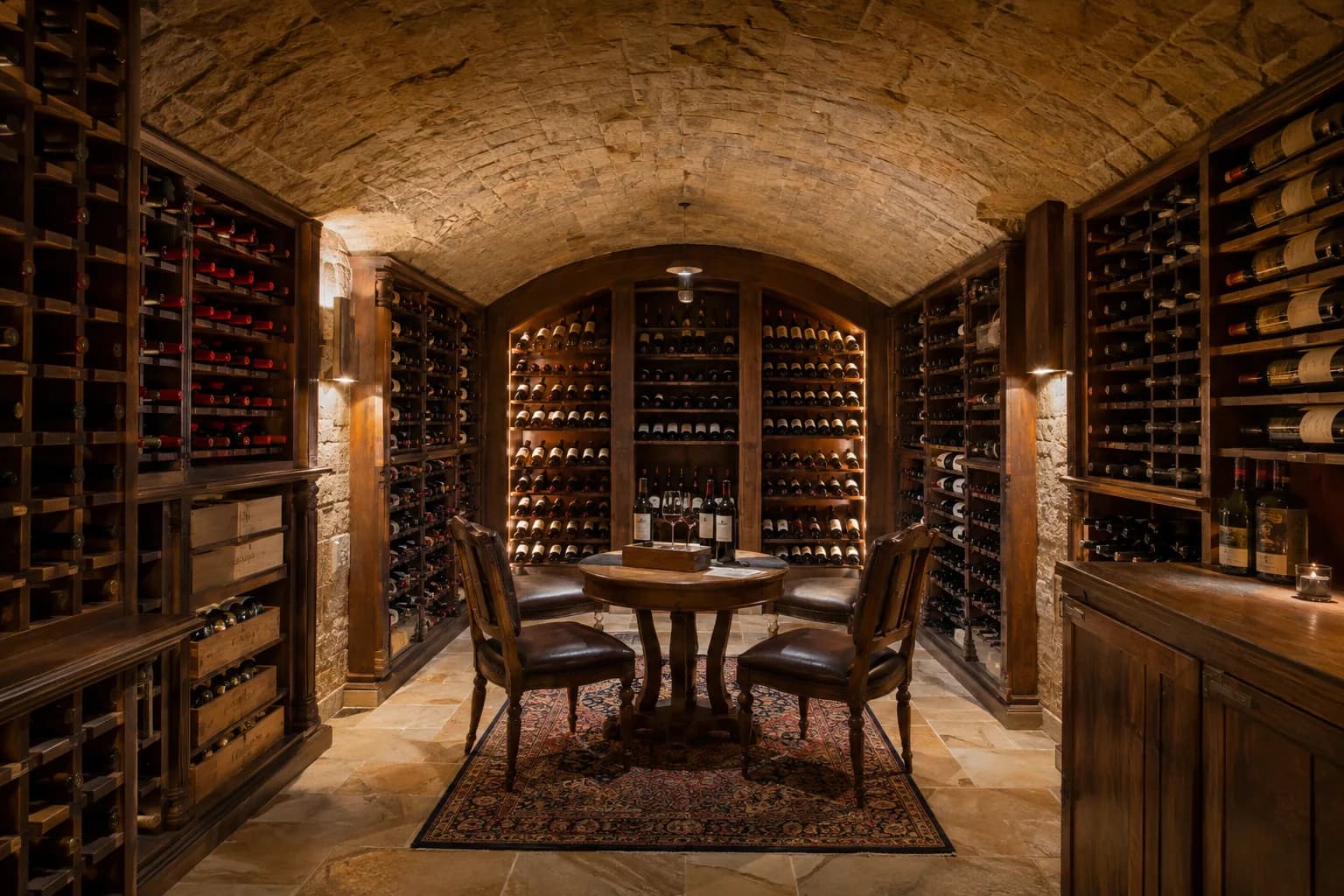
You have a cellar design you like, but the wood choices are harder to judge. One photograph looks warm and rich; another makes the same finish look almost black. Once the racks fill a wall beside your existing cabinetry, this will be a very visible decision.
We'd ask for representative samples before approving a custom finish. Start small: the two or three combinations you would actually buy, viewed beside the adjoining materials. Pay for a larger mock-up only when it answers something those samples cannot. You don't need to commission a section of cellar just to choose between two stains.
Ask for the complete finish, not just the wood
Identify the wood, stain and final surface treatment in each option. A bare piece and a finished piece answer different questions. Ask the supplier to label them so you can connect the sample in your hand to the exact line in the proposal.
Wine Rack Concepts offers a kit containing several woods with and without clear coat, plus stain examples. Wine Racks America also offers wood and stain swatches and describes its satin sealant as adding some sheen. These are examples of supplier-specific choices, not permission to apply a finish yourself or assume another maker uses the same process.
If the proposal combines racks, trim and cabinet doors, ask whether one sample represents all three. Discuss any differences you should expect. A finish name alone is a poor record of a decision that also depends on the material beneath it and the surface treatment above it.
Look at the shortlist where you will see the cellar
Set the samples beside the floor, door or cabinetry that will remain. Look from the adjoining room as well as close up. If the cellar sits behind glass, ask the designer how to make a useful comparison with the proposed glazing and lighting. The aim is to judge the combination you are buying, not recreate a supplier's studio photograph.
Say your first choice looks attractive by itself but competes with an existing dining-room cabinet. A quieter finish may give you the room you want without changing the rack design. Keep the preferred and standard options together while you decide whether an upgrade is worth its quoted cost.
Ask how much natural colour and grain variation the sample represents and whether a broader selection is available if that variation matters to you. Wine Racks America expressly notes that online images can differ because of wood variation and monitor display. A physical piece improves the conversation; it still cannot promise identical boards throughout the finished room.
Know when a larger mock-up earns its cost
A swatch is useful for colour, texture and sheen. It doesn't show an entire cabinet front, a junction between materials or the visual rhythm of a full rack bay. If one of those details is the reason you remain unsure, ask whether the supplier can make or show a representative section.
Agree the question before agreeing the charge. For example: will this sample show the proposed trim meeting the rack, in the final finish? Ask what size it will be, what is omitted, how long it takes and whether you keep it. Do not assume a custom mock-up is included because a small swatch is free.
Bottle fit is a separate test. If that's the uncertainty, use representative bottles with the proposed rack system and our capacity-planning guide. An attractive finish sample doesn't establish usable capacity or the suitability of the installed racking.
Check the sample terms before placing the order
Some suppliers make this an inexpensive first step. Wine Racks America advertises complimentary wood swatches. Wine Rack Concepts describes a sample-kit refund when you commit to ordering a cellar design with its team. Confirm the current offer directly, including shipping, eligibility and how any refund is applied; don't carry one company's policy into another quotation.
For a paid custom sample, ask whether the charge is separate from fabrication and whether any part is credited. Put the approval stage into the schedule: who needs to see the sample, when the choice becomes final and what happens if you change your mind afterward. The useful outcome is a clear finish decision before production begins.
Keep a record of the finish you chose
Have the supplier identify the accepted combination in the final order and explain how the physical sample will be retained or referenced. Ask for the expected variation and care instructions as part of that discussion. Keep any approved changes together so a later email doesn't leave two competing finish selections.
If the standard finish looks right in your home, there is no need to upgrade for its own sake. If a different combination clearly improves the room you want to live with, you can approve it knowing what the added spending buys. Our cellar experts can help you turn that preference into a focused conversation with the project team.
Sources & editorial notes
Prepared by Cellar Builder Guide editorial team. Updated September, 2026.
Prepared independently by the editorial team. No provider paid for inclusion or influenced its scope.
- Sample Swatches, Wine Racks America (accessed 2026-09-30)
- Wood and Stain Samples, Wine Rack Concepts (accessed 2026-09-30)