
The well-planned wine room
Do You Need a Separate Cabinet for Your Wine Glasses?
Compare keeping wine glasses in the kitchen with adding a cabinet or hanging rack beside the cellar tasting area, using your actual glasses and hosting routine.
Start here
At a glance
A separate glass cabinet is useful when you regularly serve wine beside the cellar and kitchen storage makes setting up or putting away a chore. First see whether your existing cabinet can hold the glasses comfortably. Compare adjustable shelves with a hanging rack using the actual glass height, bowl and base, rather than a headline glass count. Plan ordinary furniture beside the cooled enclosure; any storage inside it needs the cellar designer’s assessment.
Your glasses deserve a place in the plan
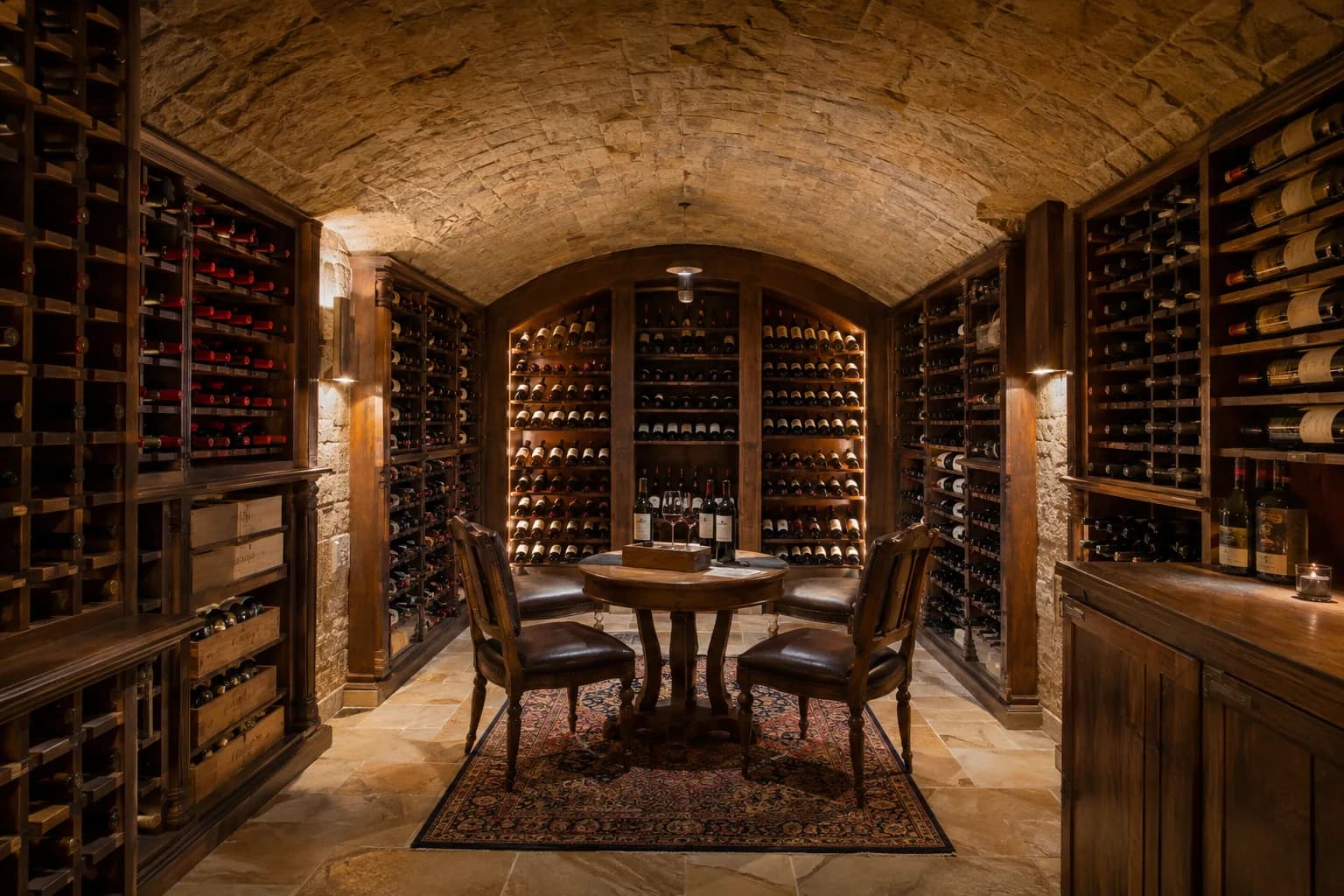
The cellar is taking shape, and you can picture friends choosing bottles before dinner. The wine has a carefully planned home. The glasses are still squeezed into the kitchen, with the large ones in a different cupboard. Is a separate cabinet beside the tasting area worth adding?
We would buy it when it makes a familiar evening easier: the glasses you use are close to where you serve, with enough room to take them out and put them back comfortably. If a nearby kitchen cabinet already does that, keep it. Matching furniture can be lovely, but it should earn the space it occupies.
Our tasting-area guide helps you choose where to sit. Here the decision is where the glassware lives. Start with storage beside the cooled cellar; don't assume ordinary furniture is suitable inside the storage enclosure. Ask the cellar designer to assess any interior proposal.
Count the glasses you bring out together
Lay out the pieces you actually use for an evening, including any larger bowls or taller stems. Say six people each have two glasses: that's twelve places to find before you include spare glasses or a decanter. This is a planning example, not a recommended collection size.
Separate everyday pieces from glasses you use only for occasional tastings. A convenient cabinet for the everyday set may solve the problem without making every rarely used piece part of an expensive new display. If you want to see the whole collection, be clear that display is part of what you're buying.
Walk through taking glasses out, serving and returning them after washing. A cabinet near the table helps less if it sits awkwardly far from where clean glasses finish their journey. The second-dishwasher guide addresses that separate appliance purchase; a storage plan doesn't require another machine.
Compare a normal cabinet before ordering specialist furniture
A household display cabinet can be a useful starting point. IKEA's BRIMNES glass-door cabinet, for example, has adjustable glass shelves, alongside fixed shelves. That shows why ordinary furniture belongs in the comparison. It does not establish that your tallest glasses fit or that the cabinet suits cellar conditions.
Ask for the usable internal dimensions, shelf adjustment range and access through the open doors. Measure the height and widest part of your actual glasses. Leave yourself room to lift a piece out without negotiating around the glass in front of it. A wide outer cabinet measurement cannot answer that question.
If you choose freestanding furniture, include assembly and the manufacturer's anchoring requirements in the plan. IKEA requires the BRIMNES cabinet to be securely anchored and calls for suitable fasteners. Have the responsible installer follow the instructions for your wall; don't leave fixing as a job to improvise after delivery.
Would you prefer hanging stems or standing glasses?
Hanging storage can make the glasses part of the room's appearance. Wine Enthusiast's N'FINITY Stemware and Tabletop kit is designed to sit on its six-column half-height rack and advertises space for up to fifteen stemmed glasses. That is a particular coordinated product, not a universal capacity standard.
Before ordering any hanging rack, ask the supplier to check the foot, stem and bowl dimensions of the pieces you own. Can each base enter the track, and can you remove one glass without bumping its neighbours? Don't decide from a photograph of smaller glasses or the advertised count alone.
Shelves give you another way to arrange differently shaped pieces. Neither format automatically wins: compare the actual fit, the look you enjoy and the way you reach for a glass. If most of your collection is stemless, a hanging-stem feature may add little useful storage.
Give occasional glassware a different home if it helps
You don't have to display everything. Wine Enthusiast also offers a divided stemware storage case for up to twelve glasses, with stated height and individual-slot dimensions. That is an alternative to investigate for occasional pieces, rather than evidence that any twelve glasses will fit.
Compare a case with the inconvenience you're trying to remove. If you host often, unpacking glasses for every gathering may defeat the purpose. For pieces used a few times a year, keeping them separately could let your everyday cabinet stay modest. Check the specific glass-care instructions and make sure the chosen storage accommodates the pieces.
Avoid buying a large cabinet now simply because you might collect more shapes later. Ask whether the layout can adapt, then decide how much unused capacity you actually want to pay for.
Ask for a room that works through the whole evening
Have the designer show the cabinet doors open alongside occupied chairs and the serving surface. Include any delivery, assembly, anchoring and custom joinery in the price comparison. Confirm that storage and serving furniture work with the final cellar design before you place an order.
Keep the kitchen arrangement when it's already convenient. Add separate storage when regular hosting makes the trip or the crowded cupboard a nuisance. Choose custom joinery when the exact layout or finish matters enough to you to justify a tailored proposal.
Our vetted cellar experts bring experience and relationships with providers. Tell us where you host and what feels awkward about the current setup. We can help you discuss a tasting area that makes choosing, serving and putting things away feel like parts of the same enjoyable evening.
Sources & editorial notes
Prepared by Cellar Builder Guide editorial team. Updated November, 2026.
Prepared independently by the editorial team. No supplier paid for inclusion or influenced this guide.
- BRIMNES glass-door cabinet, white, 904.098.72, IKEA US (accessed 2026-11-19)
- N’FINITY Stemware and Tabletop — Natural-Unlacquered, Wine Enthusiast (accessed 2026-11-19)
- Wine Enthusiast Stemware Storage Case, Wine Enthusiast (accessed 2026-11-19)