
The well-planned wine room
Is a Second Dishwasher Worth Adding Beside Your Wine Cellar?
Compare using your kitchen dishwasher with adding one beside the cellar tasting area, including glass fit, entertaining habits and commercial glasswasher limits.
Start here
At a glance
A second household dishwasher is worth considering when you regularly entertain beside the cellar and carrying used glasses back to the kitchen is a nuisance. First check whether your actual stemware fits a suitable household model and whether you need another load during the evening. Keep using the kitchen machine if it handles your routine comfortably. A commercial glasswasher is a separate equipment decision: do not assume its installation, service or warranty suits a home.
Would it change the evening, or just the photograph?
You've planned a lovely place to open wine beside the cellar. Then you picture the end of dinner: used glasses on every surface and several trips back to the kitchen. A dishwasher near the tasting area starts to look appealing. Is it a useful convenience or another appliance you won't use enough?
We would consider a second household dishwasher if you host there regularly and the journey to the kitchen gets in the way. If the tasting area is steps from a kitchen machine with spare capacity, start there. A room dedicated to wine doesn't automatically need a separate washing appliance.
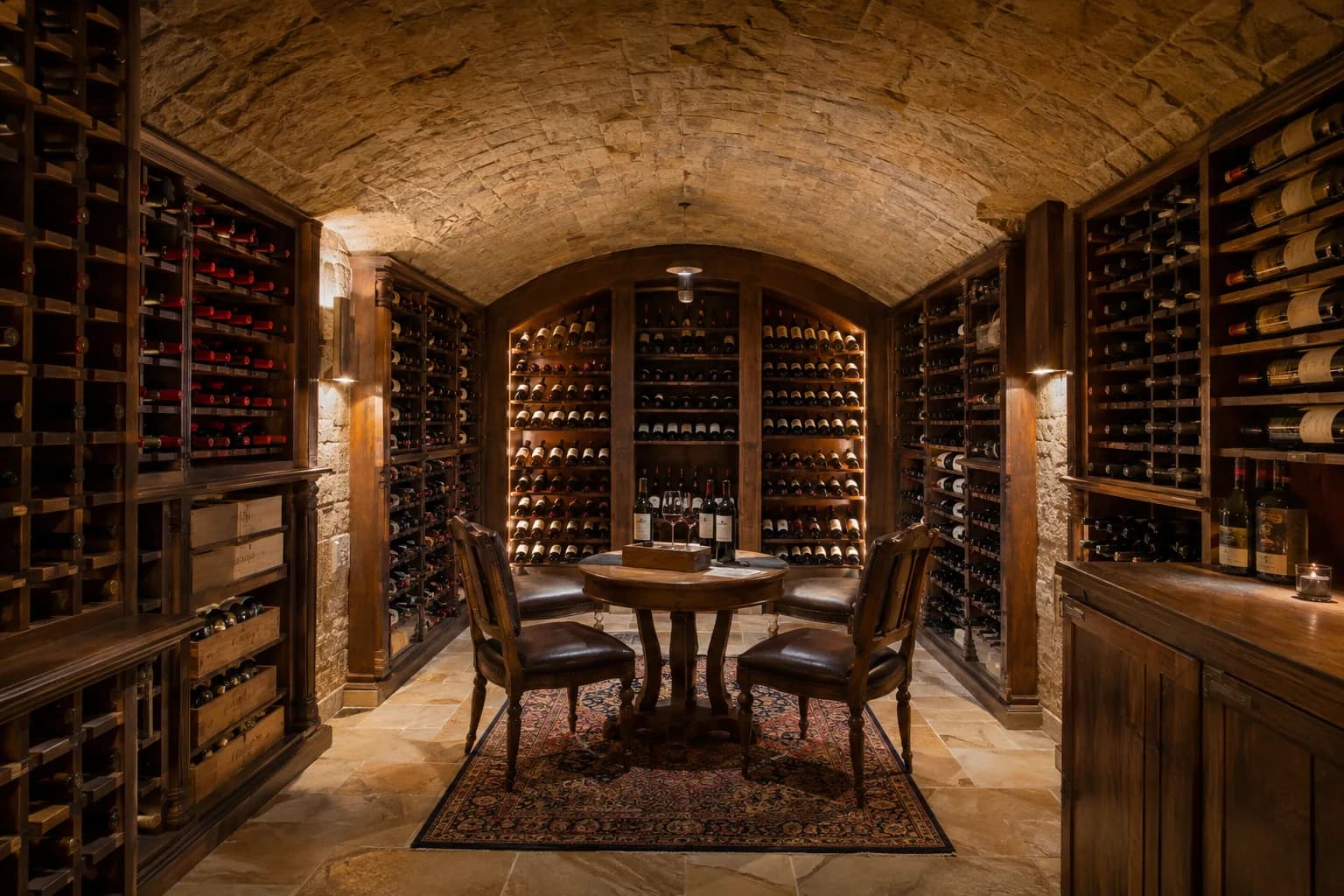
Treat this as a decision about serving and clearing up beside the collection. Our tasting-area guide covers whether to sit inside or outside the cooled cellar; adding an appliance within the storage enclosure needs a separate assessment by the responsible designer.
Count glasses for an evening you actually host
Say six guests each use three glasses during a tasting. That's eighteen glasses before any extra drinks or replacements. Compare that example with a quiet dinner using one glass each. The same appliance could feel useful in the first household and excessive in the second.
Write down where the used glasses wait, when you'd like them clean again and who clears them. If you're happy washing after everyone leaves, you mainly need enough loading space. If you want the same glasses back during the gathering, ask about the suitable program's complete cycle and drying routine. Don't use a different program's advertised speed as the answer.
Before buying a machine just to keep a tasting moving, compare the cost and storage space of another set of suitable glasses. More glasses will not solve a long walk to the kitchen, but they may remove the pressure to wash midway through dinner. Choose the inconvenience you actually want to fix.
Take your tallest glass to the showroom
A place-setting capacity doesn't tell you how many of your wide bowls and tall stems will fit. Ask the retailer to demonstrate your actual glass sizes in the proposed baskets, with the door closed and the machine configured as it would be at home. Check the resulting load, rather than assuming every advertised position can hold your stemware.
Miele offers household dishwashers with glass-support features and a China & Crystal program. Its G 7791 SCVi AutoDos K2O describes that program for temperature-sensitive glassware and lightly soiled dishes. That establishes a household option to investigate, not a guarantee for every glass or a recommendation of one model.
Riedel says most of its glasses are dishwasher safe, while identifying exceptions that need handwashing. It also advises leaving space between glasses and using a stemware rack if available. Check the care instructions for the specific glasses you own. A delicate program does not turn handwash-only pieces into dishwasher-safe ones.
A commercial glasswasher buys a different kind of service
A compact machine behind a restaurant bar can make a dedicated glasswasher look like the obvious luxury upgrade. Pause before carrying that specification into your home. The equipment, running routine and support arrangement may be quite different from those of a household dishwasher.
For example, Perlick classifies its PKD24A door-style glasswasher as commercial and lists built-in chemical storage and a deliming system. Its stated thirty-rack hourly capacity describes that particular commercial machine. It does not establish suitability for your room, your glasses or occasional household use.
If you want that category, have the supplier confirm residential use, warranty terms, local service, required consumables and the complete installed scope in writing. Let the qualified project team assess the utilities, surroundings and applicable requirements. Compare that proposal with a household dishwasher proposal before committing; a commercial label alone is no reason to pay more.
Give it space to work when the room is busy
Ask your designer to show the appliance with its door open, someone loading it and guests sitting where you expect them to sit. Include a landing place for used glasses and somewhere for clean ones. An appliance that fits under a counter can still make clearing up awkward if everything has to balance on the tasting table.
Talk through the route from glass storage to serving, washing and putting away. If clean glasses live in the kitchen, decide whether you would actually move them or keep walking back anyway. If you prefer a small tasting ledge rather than a full serving area, a second machine may demand more cabinetry than the experience warrants.
Request an itemized installed price covering the appliance, specified cabinetry and panel, trade work, delivery and commissioning, with responsibilities assigned. Have the team confirm the proposed location against the appliance instructions and cellar design. Don't buy first and leave the builder to find somewhere for it.
Choose the convenience you will keep enjoying
Keep the kitchen arrangement when it already works. Choose another household machine when regular entertaining makes the separate washing point useful and the actual glasses fit. Explore commercial equipment only when its particular service makes sense for you and the supplier and project team support that use.
Our vetted cellar experts bring field experience and relationships with providers. Tell us how you host and where clearing up becomes a chore. We can help you discuss the tasting-area brief with the right team, while your appliance supplier confirms the specific machine and glass-care requirements.
Sources & editorial notes
Prepared by Cellar Builder Guide editorial team. Updated November, 2026.
Prepared independently by the editorial team. No supplier paid for inclusion or influenced this guide.
- G 7791 SCVi AutoDos K2O household dishwasher, Miele USA (accessed 2026-11-18)
- Frequently Asked Questions — dishwasher safety and glass care, Riedel (accessed 2026-11-18)
- PKD24A Door-Style Glasswasher (with heat), Perlick (accessed 2026-11-18)